



 (770) 703-6008



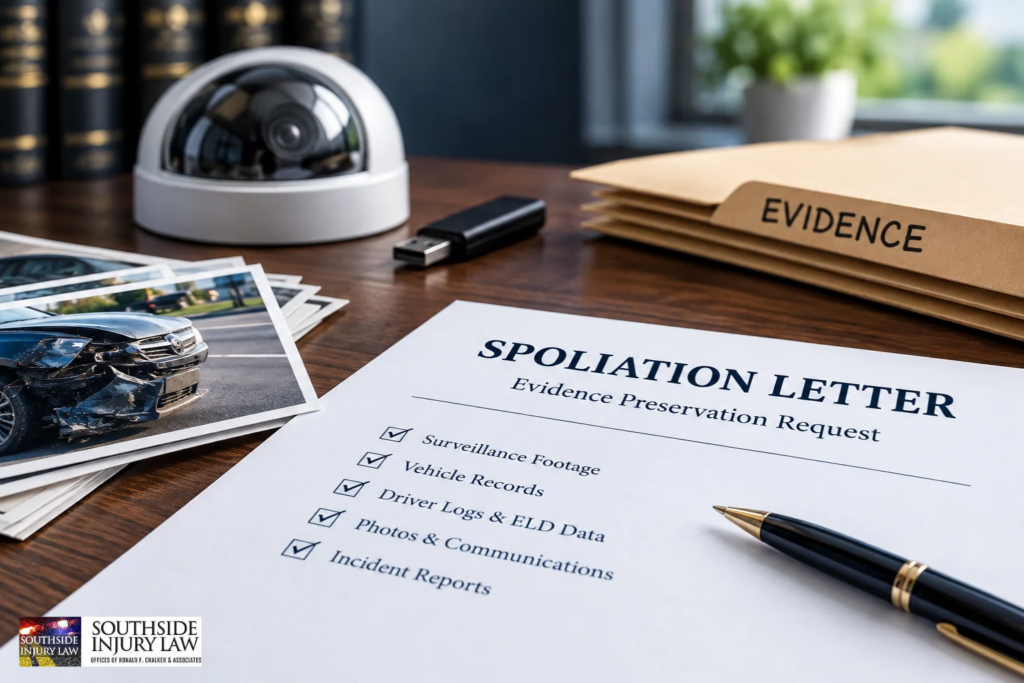
A spoliation letter is a formal written request to preserve evidence that may become important in a personal injury claim.
After an accident in Georgia, evidence can disappear when businesses overwrite surveillance footage or vehicles undergo repairs. Sending a timely preservation request can help protect information needed to establish liability and document injuries.
The letter identifies relevant evidence and asks its recipient to prevent destruction or alteration. Although it does not guarantee preservation, it can create a record of the request and help protect potential legal claims.
What Is a Spoliation Letter, and Why Does It Matter?
The what is a spoliation letter question often arises when injured people worry that important evidence might disappear after an accident. A preservation letter identifies specific materials connected to an accident and requests that the recipient retain them.
Under Georgia law, preservation duties can arise when litigation becomes reasonably foreseeable. A letter may help establish notice, but it does not automatically prove misconduct or guarantee a court remedy.
What Evidence Should a Spoliation Letter Preserve?
A spoliation of evidence letter should describe the incident, relevant materials, and requested preservation steps. Specific requests help recipients identify what they need to retain. Broad or unclear demands can create unnecessary disputes about the evidence involved.
Potential evidence includes:
- Surveillance footage from businesses, parking lots, or nearby buildings.
- Vehicle damage, event data, and electronic vehicle records.
- Truck driver logs, dispatch records, and onboard camera footage.
- Inspection reports, maintenance records, and incident reports.
- Photographs, communications, and witness-related documentation.
An effective letter of spoliation should identify the accident’s date, approximate time, and location. It should explain which evidence relates to the incident and request preservation of relevant electronic and physical materials.
When Should You Send a Spoliation Letter?
Timing matters because businesses may routinely overwrite recordings or discard records. Send a preservation request as soon as possible after recognizing that evidence could support a claim. Waiting may allow important materials to disappear before anyone requests them.
Spoliation Letter After a Slip and Fall
A spoliation letter slip and fall request may seek surveillance video, inspection logs, cleaning schedules, and incident reports. These records could help establish whether a property owner knew about a dangerous condition.
For example, footage might show a spill remaining on a store floor before someone fell. Prompt requests matter because surveillance systems may automatically overwrite older recordings. Keep a copy of the request and document when and how it was delivered.
Spoliation Letter in Trucking Accident Cases
A spoliation letter trucking request can help preserve evidence controlled by trucking companies, insurers, and other parties. Relevant materials may include electronic logging data, driver qualification records, inspection reports, and onboard video. Some records may be subject to separate retention rules or limited storage periods.
A preservation request should identify the collision and relevant records as precisely as possible. Attorneys can help identify evidence categories and direct requests to the appropriate parties.
What Happens If Someone Destroys Evidence?
Destroying relevant evidence does not automatically establish liability for the underlying accident. The spoliation letter meaning relates to preserving evidence that may become important in a legal claim. A court generally considers whether a preservation duty existed, whether evidence was lost, and the surrounding circumstances. Available remedies depend on applicable law and the facts.
Potential consequences may include:
- Court-imposed evidentiary restrictions or other sanctions.
- An adverse inference in appropriate circumstances.
- Additional disputes about missing evidence and resulting prejudice.
Georgia courts have discretion when addressing alleged spoliation. The outcome depends on the evidence and circumstances, including notice of contemplated litigation.
How Do You Write a Spoliation Letter?
If you’re asking what is a spoliation letter?, the practical answer begins with identifying the evidence that needs protection. A preservation letter should be factual, focused, and specific.
Include these elements:
- The injured person’s name and contact information.
- The accident date, approximate time, and location.
- A brief description of the incident.
- A clear list of relevant evidence to preserve.
- A request to suspend routine deletion or disposal practices for that evidence.
- Instructions to contact the sender about preservation arrangements.
The letter should avoid unsupported accusations and overly broad demands. Consider having an attorney prepare it when the evidence is important or litigation is likely.
Protect Important Evidence Before It Disappears
A timely spoliation letter can help protect evidence that may be critical to an injury claim. However, identifying relevant records and understanding Georgia’s preservation rules can be challenging without legal guidance. Early action may help prevent avoidable evidence loss and strengthen your ability to evaluate potential claims.
Southside Injury Law Offices assists injured people with personal injury claims and evidence-related concerns. If you need help preserving evidence after an accident, call (770) 703-6008 or visit our contact page to discuss your situation.
Frequently Asked Questions
What is a letter of spoliation?
A letter of spoliation is a written request to preserve evidence relevant to a potential legal claim. It may identify surveillance footage, vehicle records, photographs, or other materials that could otherwise be lost or destroyed.
Which type of evidence is most subject to spoliation?
Surveillance footage, electronic records, vehicle data, and physical evidence are particularly vulnerable. A spoliation of evidence letter can request preservation before routine deletion, repairs, disposal, or overwriting makes these materials unavailable.
What are some examples of spoliation of evidence?
Examples include deleting relevant surveillance footage, destroying a damaged vehicle before inspection, or discarding records after receiving notice of potential litigation. A spoliation letter may help document a request to preserve this evidence.
How to write a letter of intent to sue?
Identify the parties, describe the incident, explain the legal concern, and state the requested response. If evidence preservation is important, include a spoliation letter requesting that relevant materials be retained. An attorney can help ensure the letter suits your legal objectives.